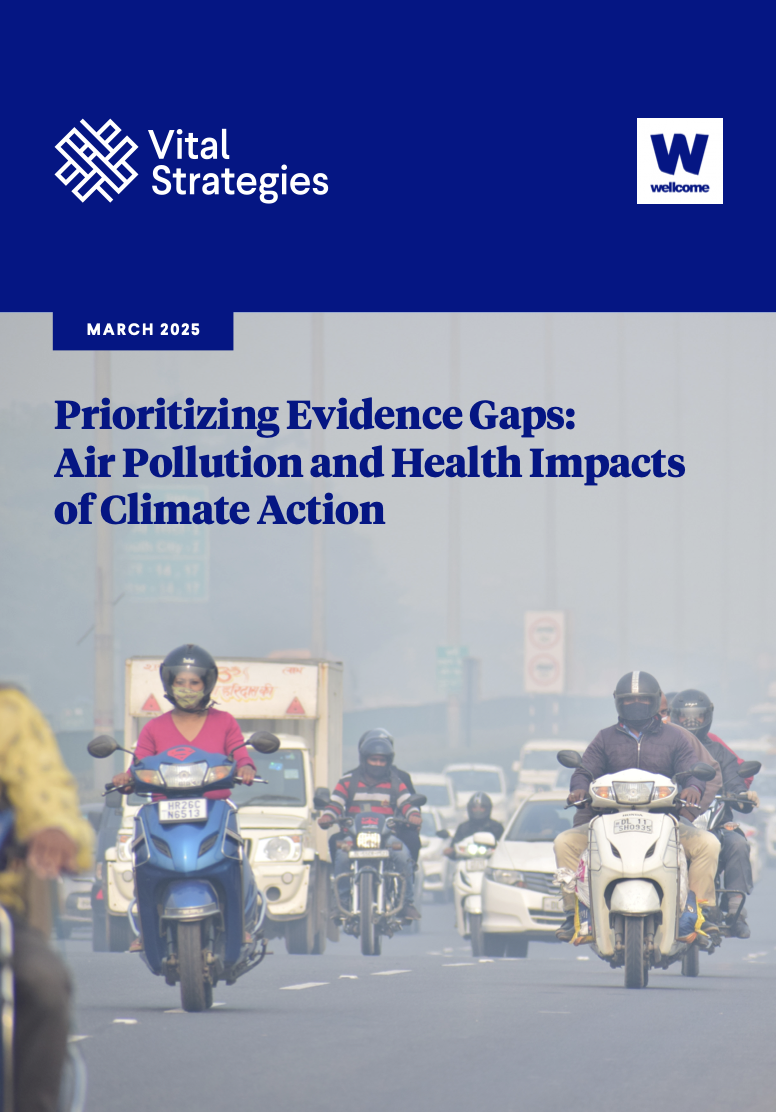
Globally, around 8 million deaths are associated with air pollution each year. The vast majority of these deaths are caused by anthropogenic sources of combustion, including energy production, power generation, transport, waste burning, industry and biomass burning (for household energy and agriculture). These activities result in a complex mixture of health- and climate-damaging pollutants with warming and cooling effects, including particulate matter, ground-level ozone, carbon dioxide, nitrogen dioxides and sulfur dioxides. Climate action to address these leading global sources of pollution in a way that results in net-cooling would offer short-term benefits to health while providing longer-term benefits to the planet.
We conducted a rapid scoping activity to identify and prioritize gaps in the evidence base that may be limiting cities’ and countries’ abilities to demonstrate the health impacts of climate mitigation actions targeting combustion source air pollution.
Read the report here.
Download the executive summary here.
Recent Abstracts
Lessons from Vietnam’s Campaign for a Tax on Sugar-Sweetened Beverages
Principles of Alcohol Taxation
Clean Air in Jakarta: Gaps and Possibilities Toward Low Emission Practices
Public Attitudes Towards Alcohol Policy: South Africa
Quality Assurance and Improvement Framework for Medical Certification of Cause of Death and…
More Data Better Health: Climate and Health in the Legal Amazon
Mais Dados Mais Saúde: Clima e Saúde na Amazônia Legal
Health Taxes Action Guide
Opinión pública frente a la política de alcohol: Colombia
Public Attitudes Towards Alcohol Policy: Colombia