Lead is a potent toxin that can severely affect the mental functioning and physical health of children and adults. Children are particularly vulnerable to lead poisoning because they absorb significantly more lead from their environments than adults and their central nervous systems are still developing.
According to estimates from the 2019 Global Burden of Disease (GBD) study, India accounted for more than half of the total global morbidity and mortality attributable to lead, despite having only 18% of the global population. Based on modeled estimates, Bihar had the highest blood lead level among all Indian states. However, no statewide monitoring data on children’s blood lead level was available in Bihar to verify this concern.
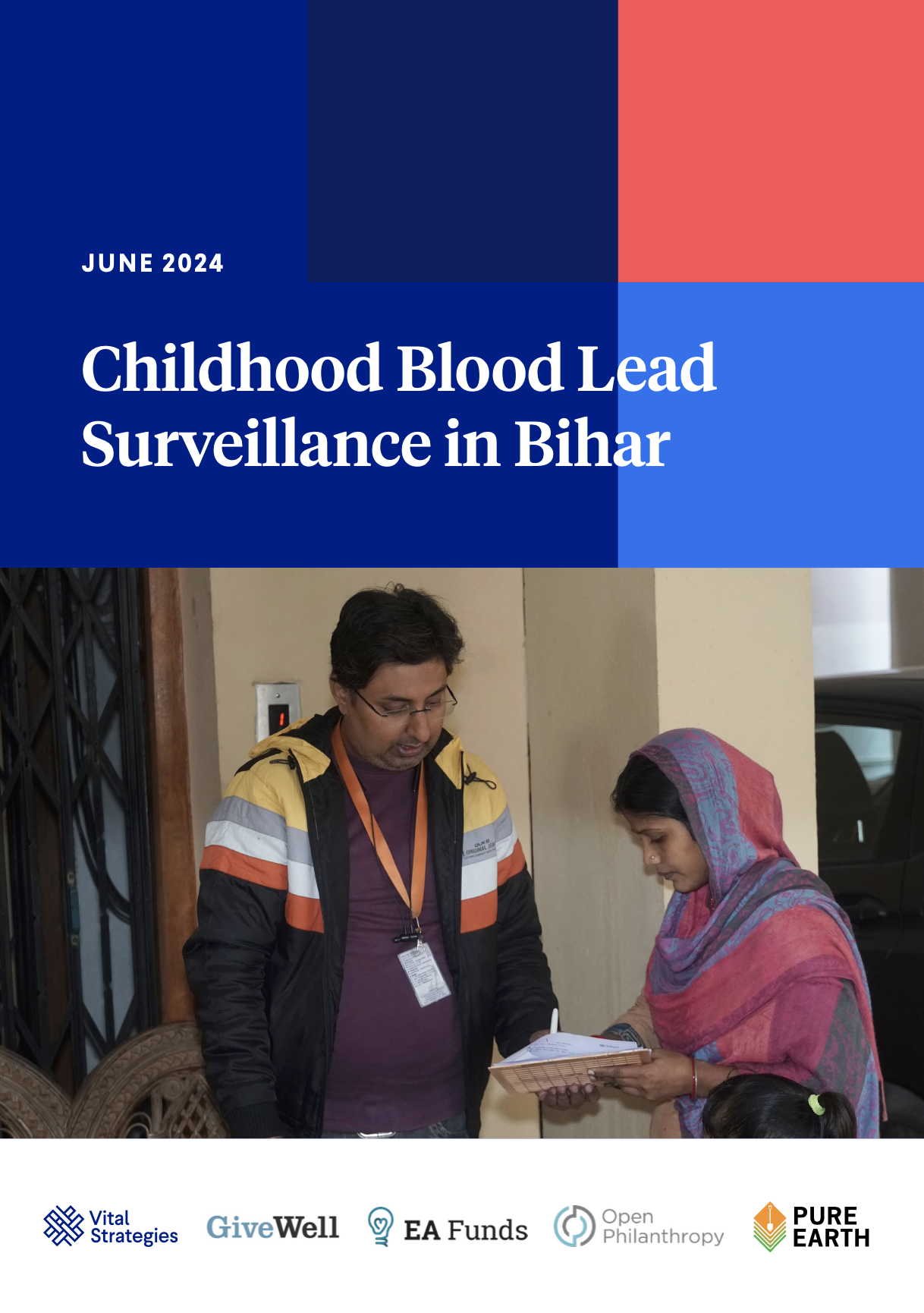
In 2023, Vital Strategies, in partnership with Pure Earth and Mahavir Cancer Sansthan and Research Center, conducted the first statewide study to understand blood lead levels (BLLs) in children under the age of 5 and their pregnant mothers in Bihar, India. This report discusses the findings from this study and provides recommendations to strengthen government efforts to end childhood lead poisoning.
Read the published scientific paper on blood lead levels and risk factors among Bihar children here.
Read the executive summary here and the full report here.
Read the published scientific paper on the sources of lead exposure measured in the home environment in Bihar here.
Recent Abstracts
Lessons from Vietnam’s Campaign for a Tax on Sugar-Sweetened Beverages
Principles of Alcohol Taxation
Clean Air in Jakarta: Gaps and Possibilities Toward Low Emission Practices
Public Attitudes Towards Alcohol Policy: South Africa
Quality Assurance and Improvement Framework for Medical Certification of Cause of Death and…
More Data Better Health: Climate and Health in the Legal Amazon
Mais Dados Mais Saúde: Clima e Saúde na Amazônia Legal
Health Taxes Action Guide
Opinión pública frente a la política de alcohol: Colombia
Public Attitudes Towards Alcohol Policy: Colombia